Symbolic Works — Insights into the Unconscious
These works use figures, postures and symbolic compositions to give form to emotional states, inner conflicts and relational dynamics.
Each character belongs to the language of the painting: it may represent a desire, a fear, a tension, a role or a part of the self.
The relationships between the figures do not seek to offer definitive psychological explanations, but to open a space for personal observation and reflection.
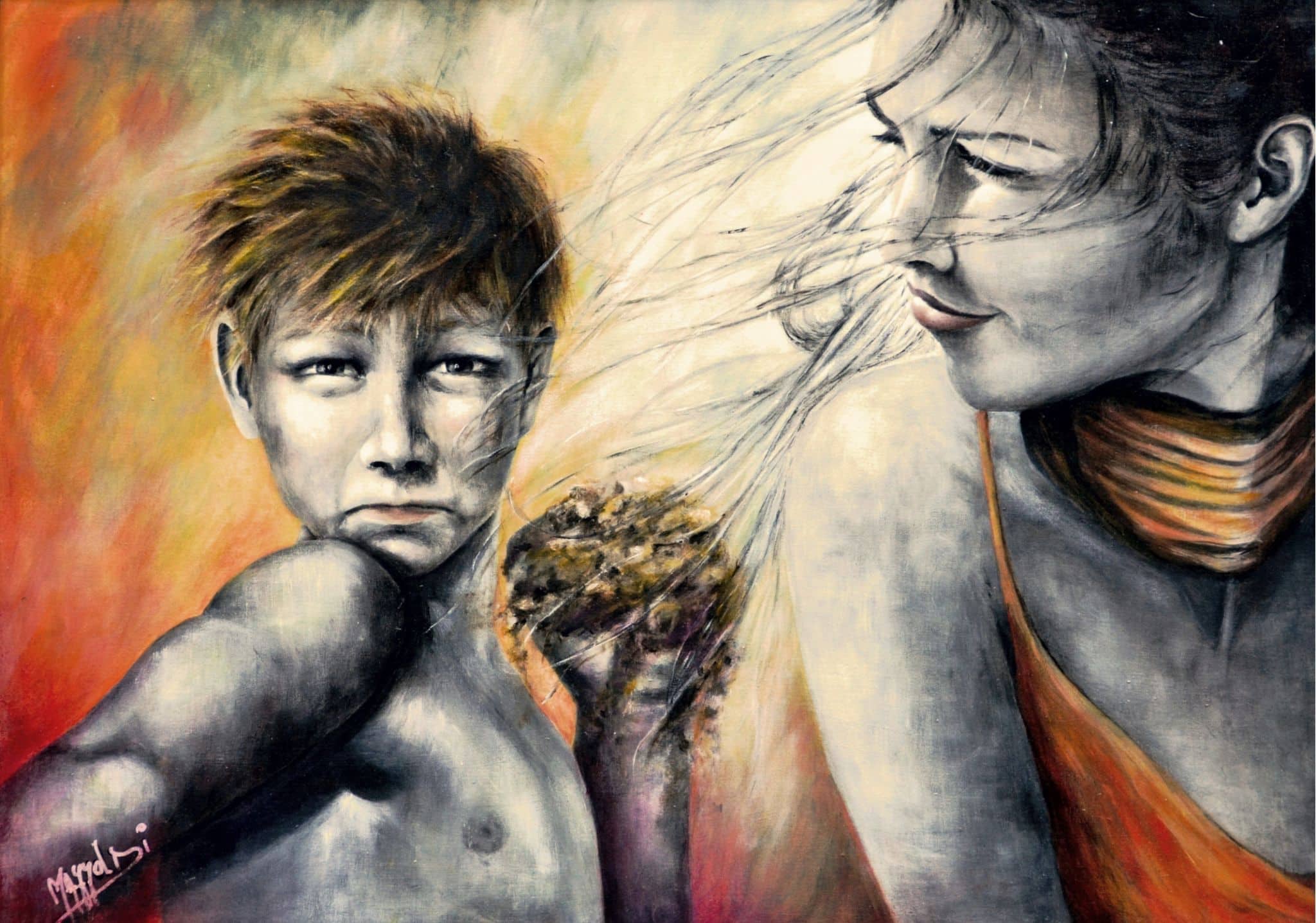
In this introspective work, Aurora Mazzoldi explores the ambiguous bond of complicity between mother and child. The child, still in need of guidance and direction, finds in the mother not a reference point, but an ally in disorder. Laughter and play conceal an unbalanced relationship: what might seem affection turns into emotional laziness and a withdrawal of responsibility.
The painting invites the viewer to reflect on the thin line between love and lack of awareness: a gesture may be nurturing or destructive, depending on the intent that drives it—often unconscious. Through posture and gaze, the artist depicts the fragility of the parental role when ethical orientation is absent. An intense and symbolic work, where relational dynamics become the core of the pictorial message.
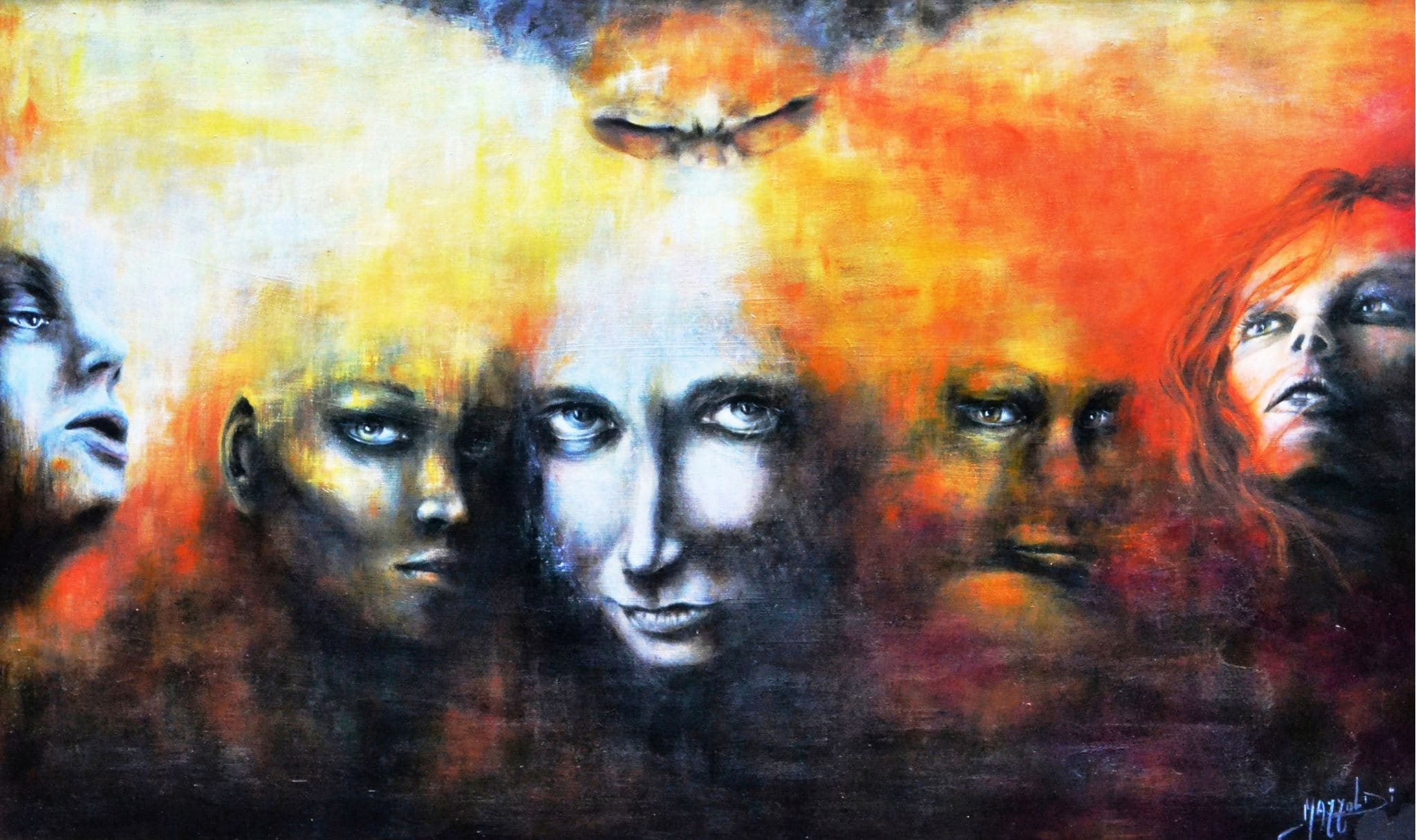
“Witches” is a powerful visual representation of the many masks of the feminine ego, understood not as mere disguises but as strategies of survival, conquest, and adaptation. Aurora Mazzoldi investigates the psyche with the eye of a symbolic analyst: each figure in the painting is a possible declination of identity, a reflection of what we are—or choose to become.
The victim, the seductress, the fighter, the shadow: each archetype embodies a way of holding power, but too often that power is unconsciously handed over to the ego, transforming strength into a prison.
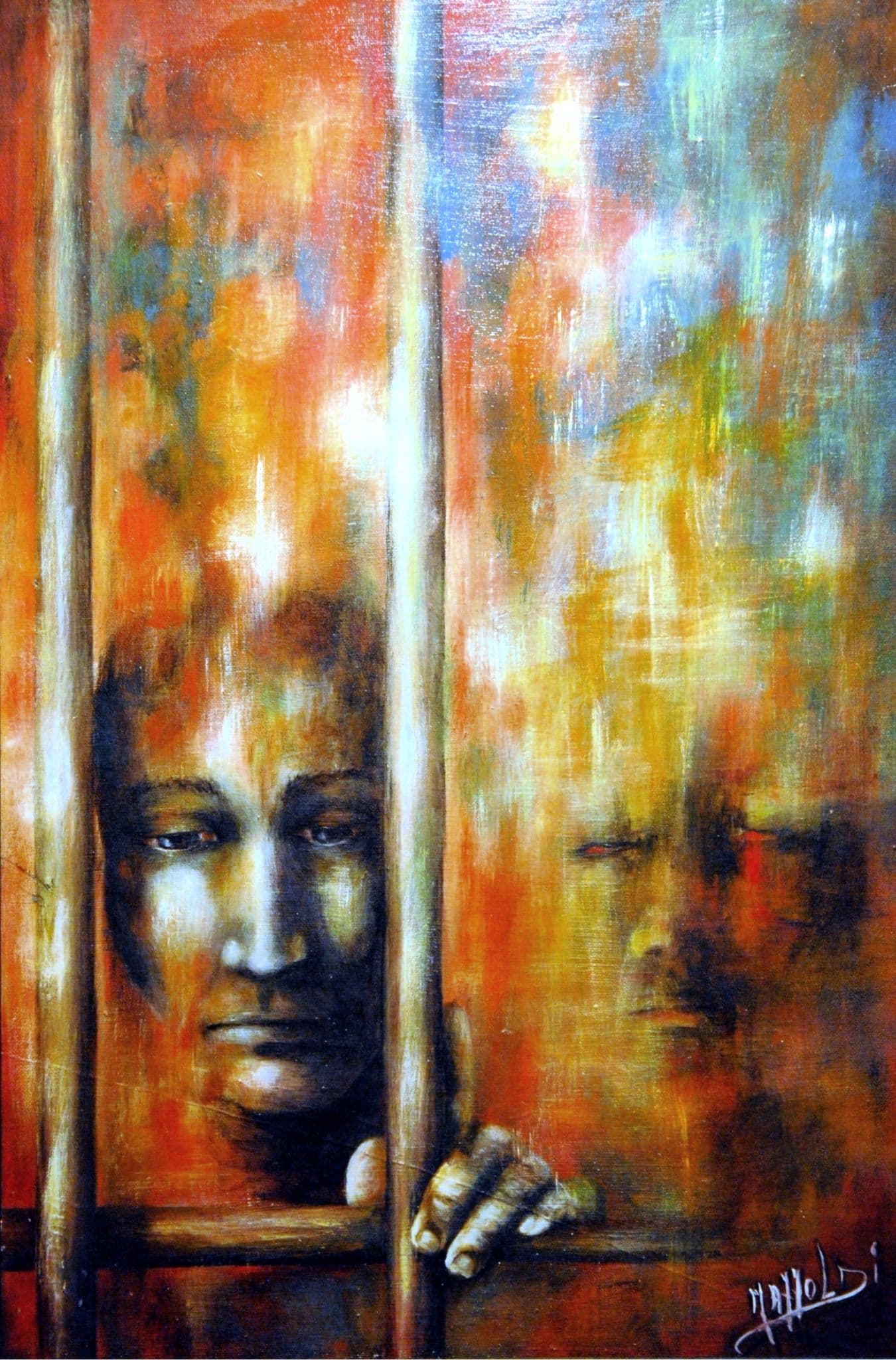
An emotional prison
In the symbolic language of the work, the central figure appears enclosed in a space dominated by dark thoughts and obscure presences. The lost gaze and the hand gripping the bars evoke isolation, immobility and the difficulty of glimpsing a way out.
The painting translates a possible experience of depression into an image without seeking to define it clinically: it conveys the sensation of being imprisoned in an inner world that seems to narrow until every opening is excluded.
An intense image of psychic fragility and solitude.
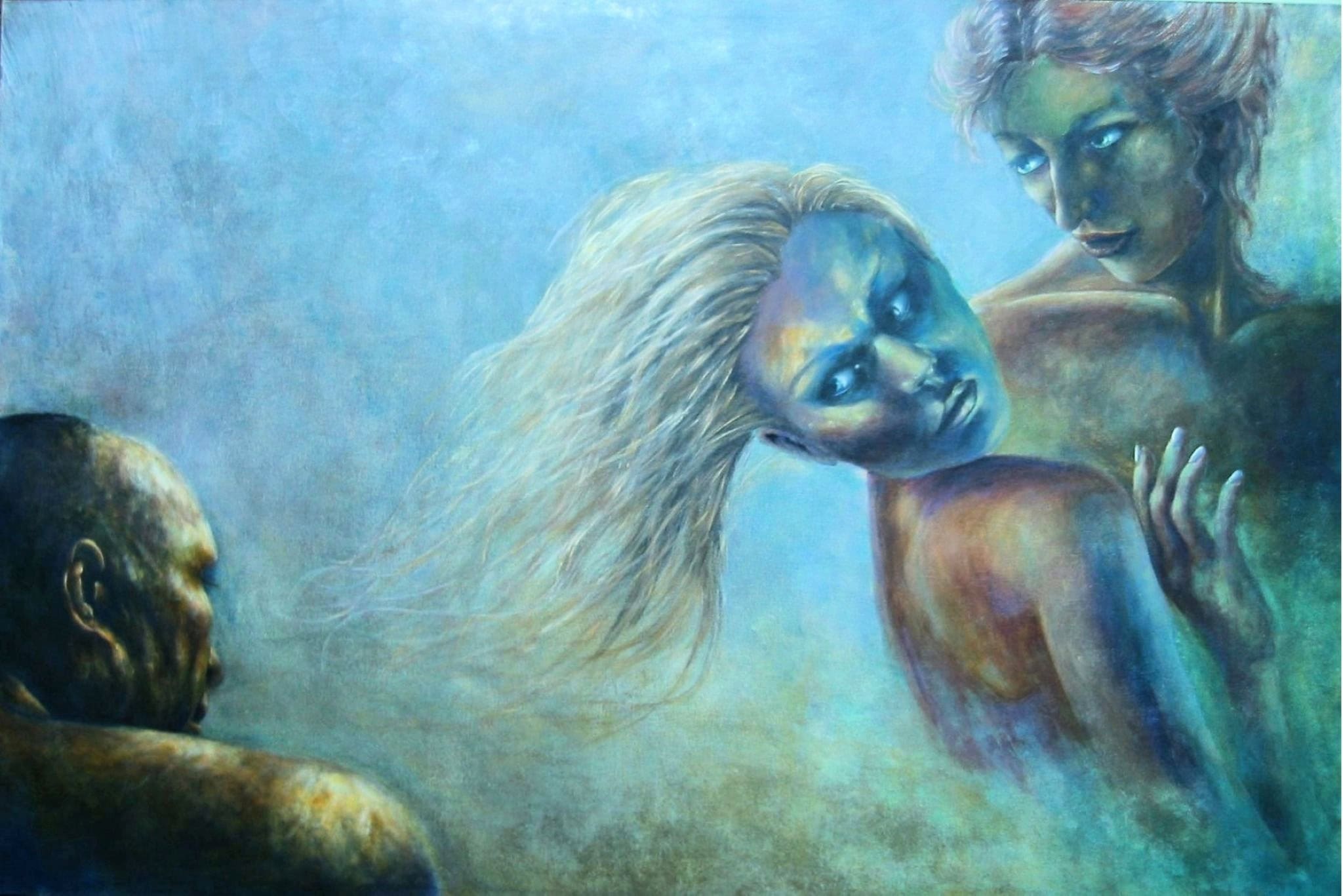
In this painting, the artist portrays romantic relationships as a game of power between prey and hunter. The bodies engage in a visual dance of tension, seduction, and ambiguity.
The work explores the ambivalence of attraction, where vulnerability and control chase one another without ever revealing a victor. Bonds become “entanglements”—emotional threads that bind but can also trap.
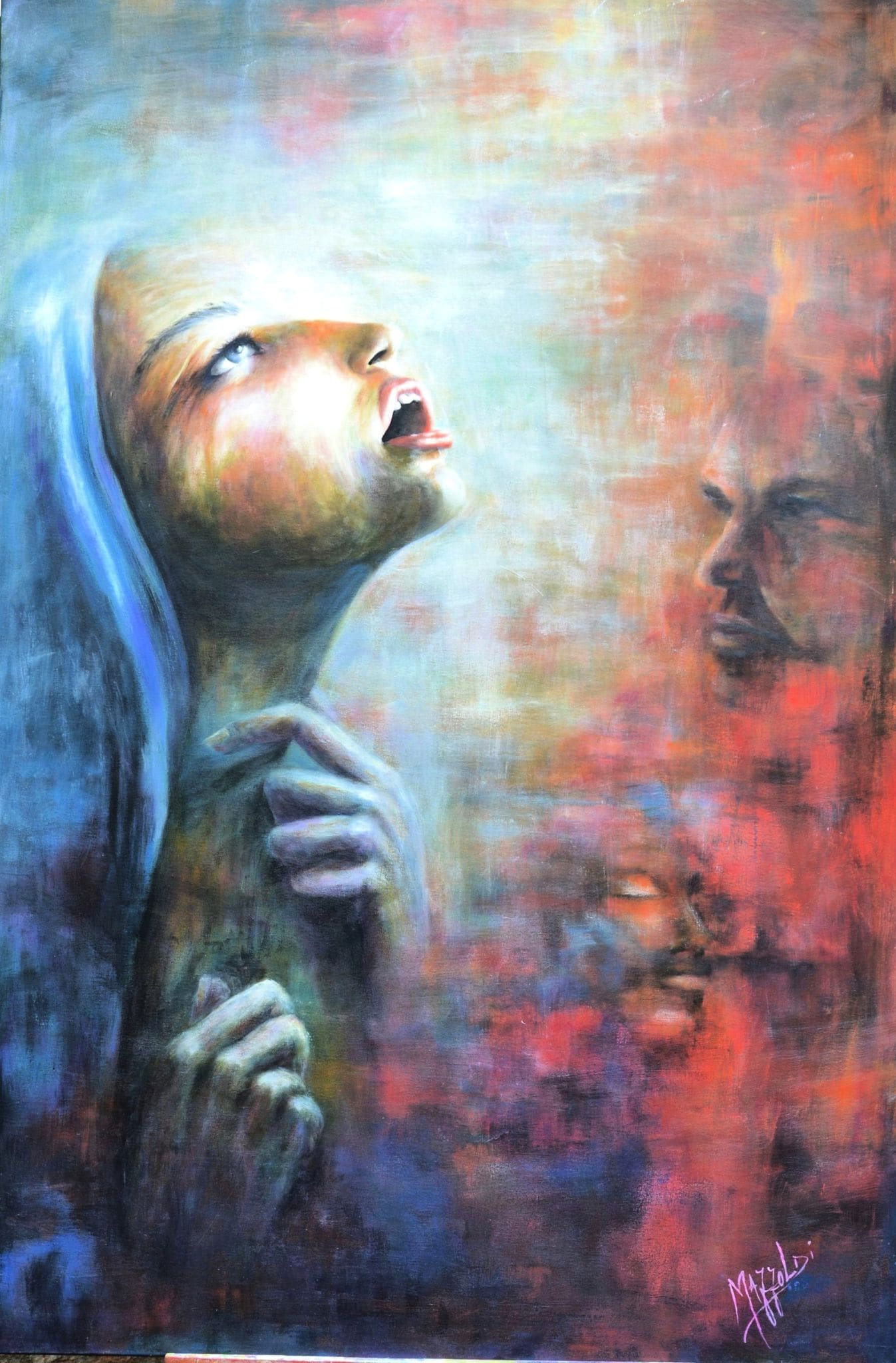
The scene depicts a woman holding back a scream, blocked by a hand on her throat: the symbol of suppressed suffering, denied a voice. Beside her, a shadowy figure embodies the dark side that prevents relief, turning pain into mute anger.
Her upward gaze seeks an escape, a spiritual or divine contact, but emotional tension keeps her in silence.
With dramatic intensity, this painting conveys the struggle between the need to express pain and the fear of judgment or rejection. A potent symbolic representation of trauma and denied hope.
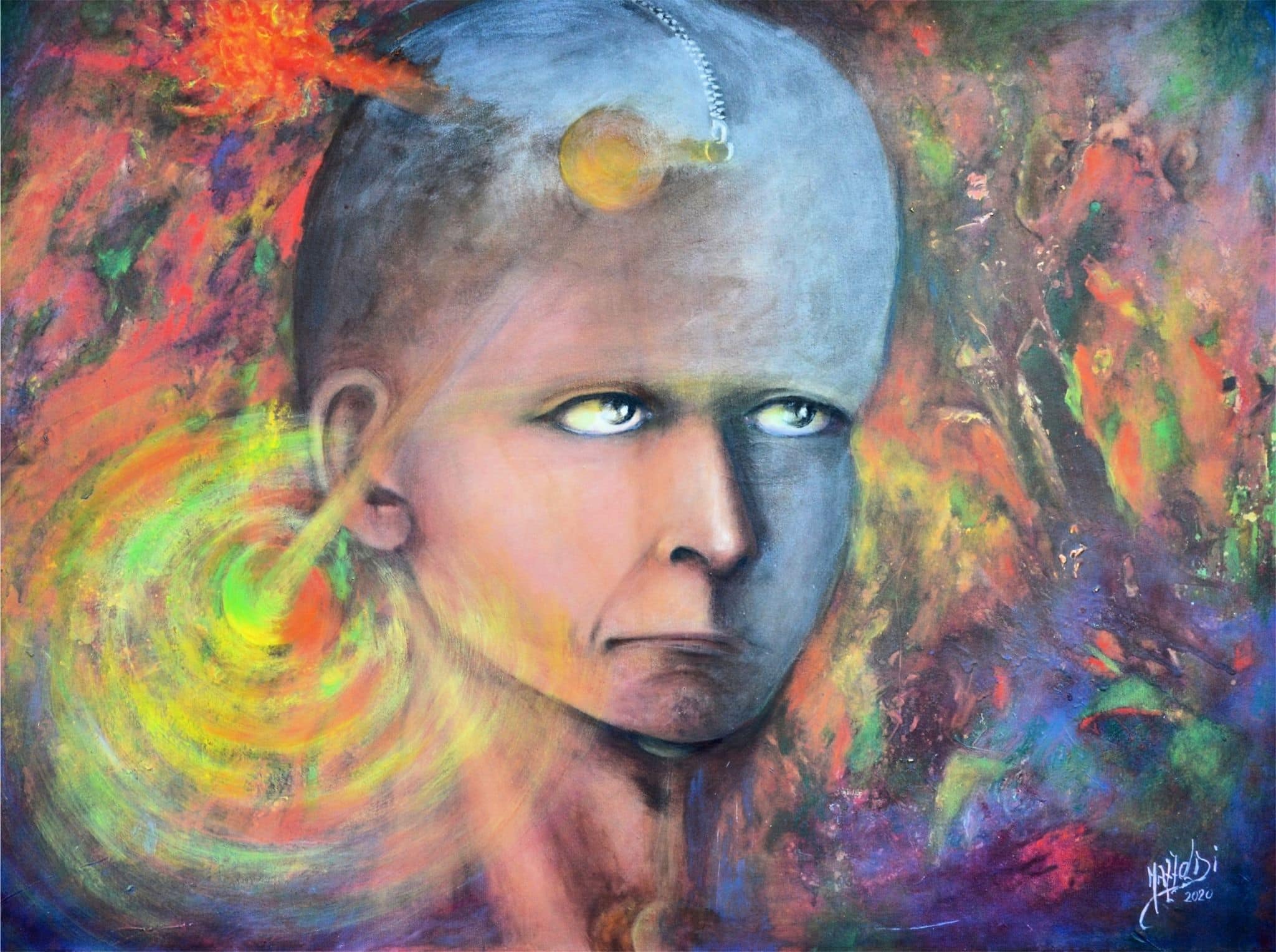
In The Mechanism, Aurora Mazzoldi investigates with lucid and relentless vision the inner transformation that occurs when the human being yields to the supremacy of the mind at the expense of the heart.
The artist depicts the moment when vital and emotional functions are absorbed by mental automatisms, producing rigidity, repetitive patterns, and physical tension. The gaze stiffens in a single direction, intuition fades, and the mind/ego imposes strategies of control, aggression, closure.
A symbolic tale of inner dehumanization, reminding us of the risk of becoming programmed, cold, and predictable beings. The work poses an urgent question: what happens when we stop listening to the heart?
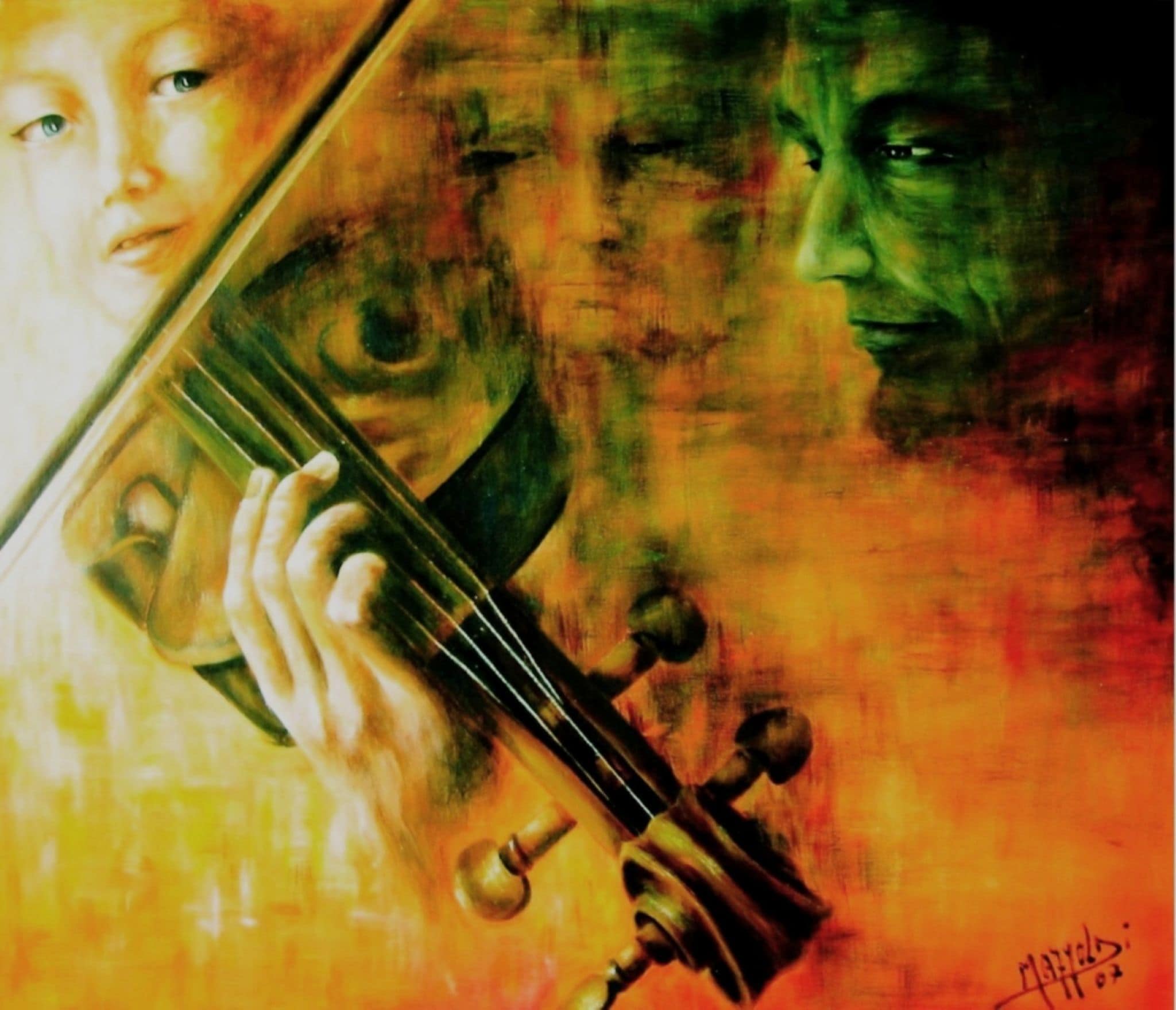
When art offers relief
In Music, sound waves cross the scene and meet the emotional tensions, introducing movement, lightness and harmony.
The work springs from the idea that music and, more broadly, the artistic experience can offer a space of relief, lift the gaze and foster a renewed contact with one’s interiority.
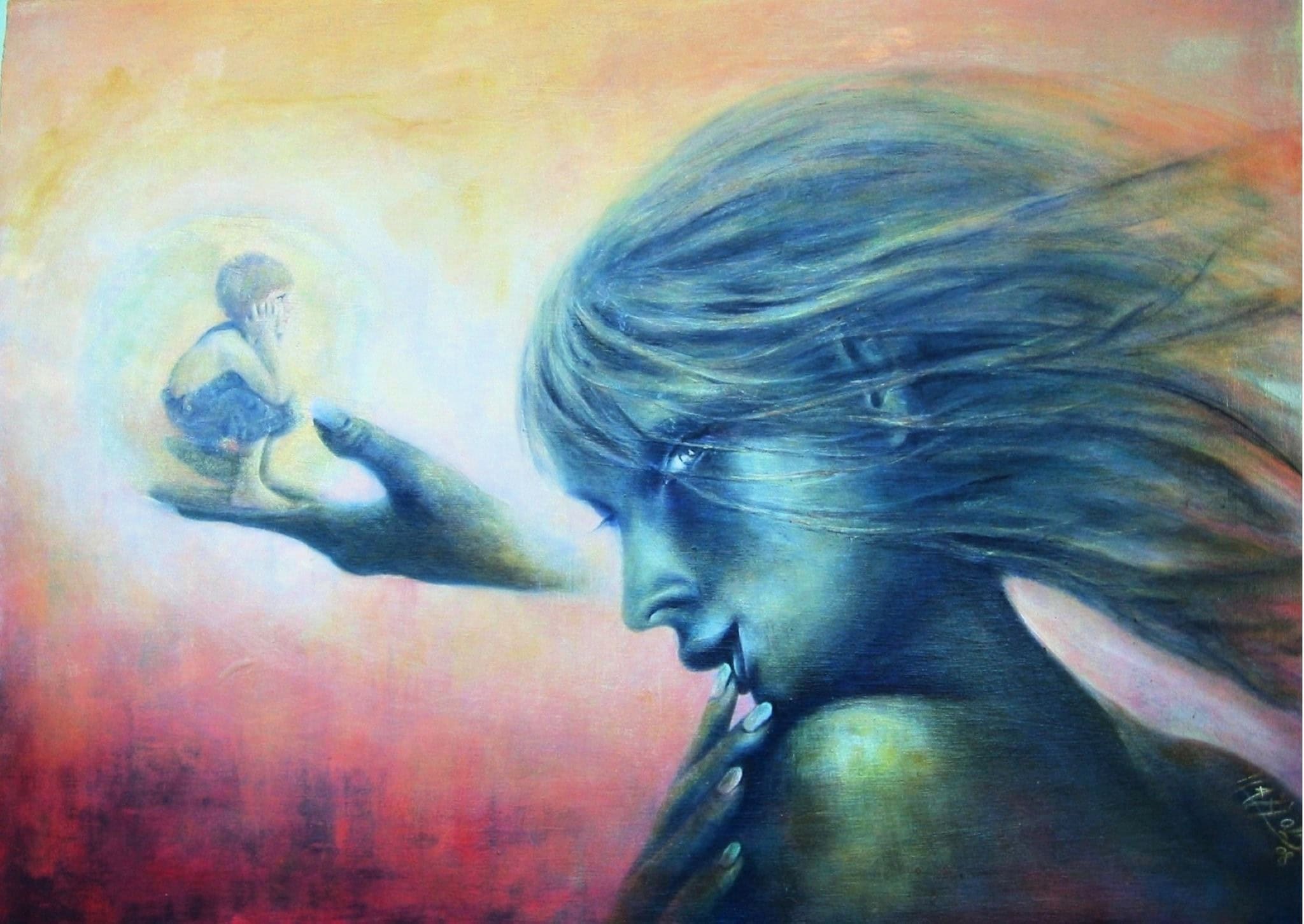
Here Mazzoldi explores the tension between the recklessness of youth and the unhealed wounds of childhood. The young protagonist seems to challenge life itself: bold and irreverent, she defies the storms with both charm and destructiveness—an innocent malice, as the title suggests.
In the background, a powerful image: an elderly figure holds a child trapped in a transparent sphere—a symbol of blocked childhood and unresolved trauma that resurface in adulthood.
The painting suggests that authentic freedom in youth is only possible by dissolving these early knots. Otherwise, old age risks becoming a return to inner prisons rather than a place of peace.
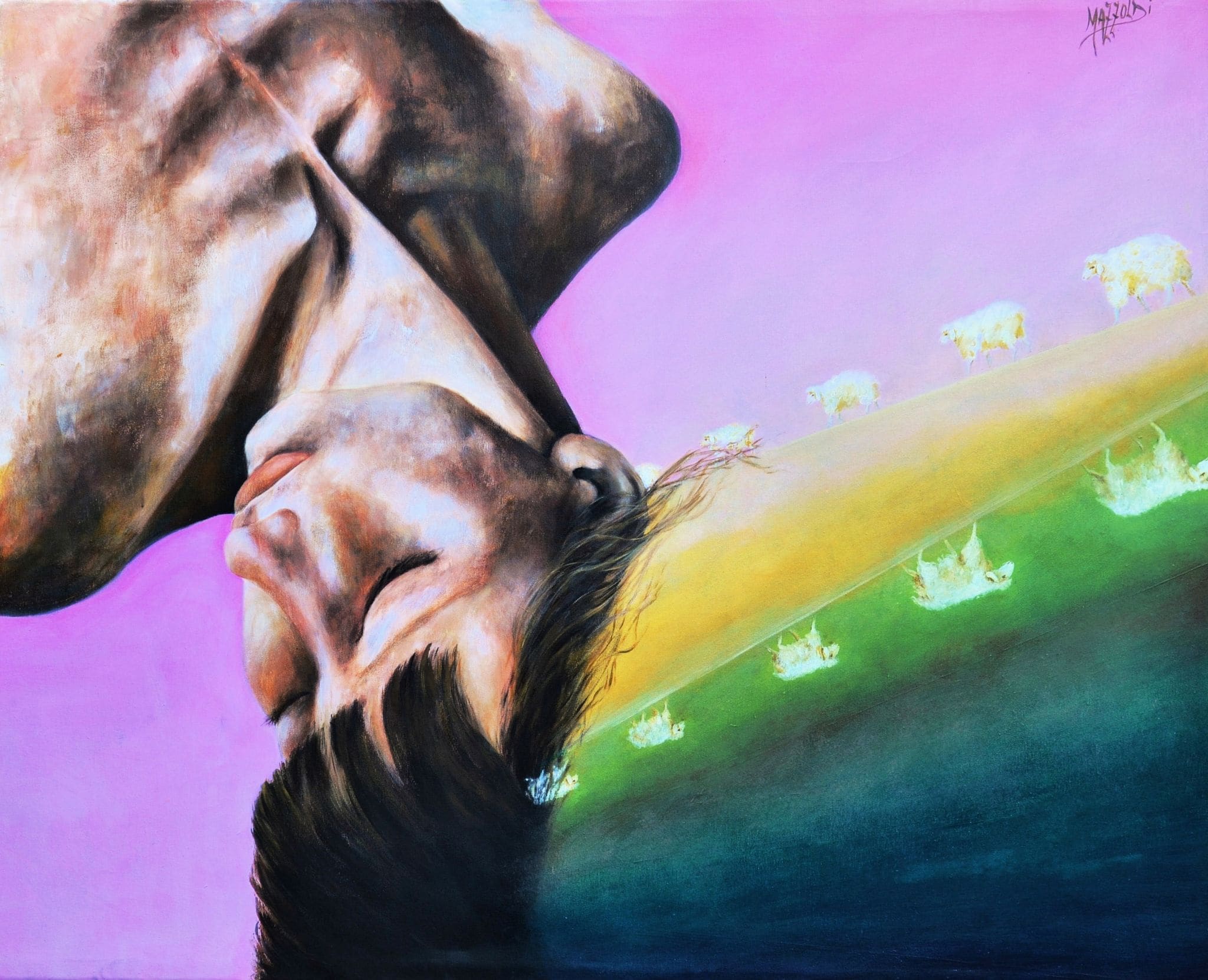
This painting explores the suspended moment between wakefulness and sleep, when thought slows down and a space of quiet, listening and renewal can open. The inner essence, freed from thoughts, emerges to embrace renewal.
A symbolic work that portrays the threshold between consciousness and the unconscious, where the most subtle forces of inner transformation are activated.
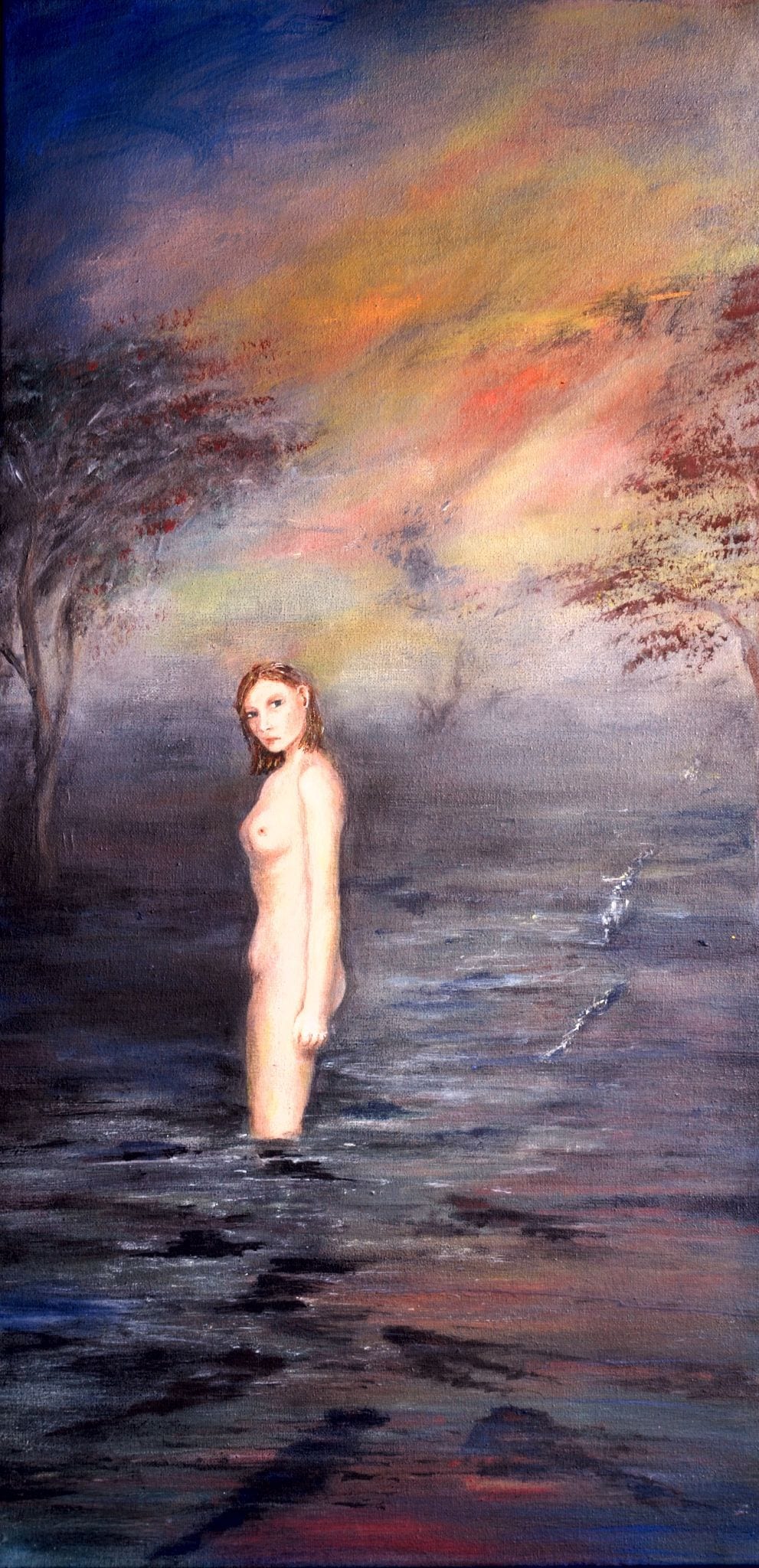
In The Swamp, Mazzoldi portrays a state of stagnant inner life, where anger, rigidity, and fear trap the individual in a murky emotional landscape. Dark waters—a metaphor for the wounded subconscious—host threatening fish, but also two lantern-fish that symbolize the possibility of ascent.
No external chains hold the figure back, only the resistance generated from within. Clenched fists, tense body, contracted gaze: the environment is the mirror of inner attitudes.
A ray of light breaks in from above, but the central question remains: are we truly ready to abandon the struggle and embrace transformation?
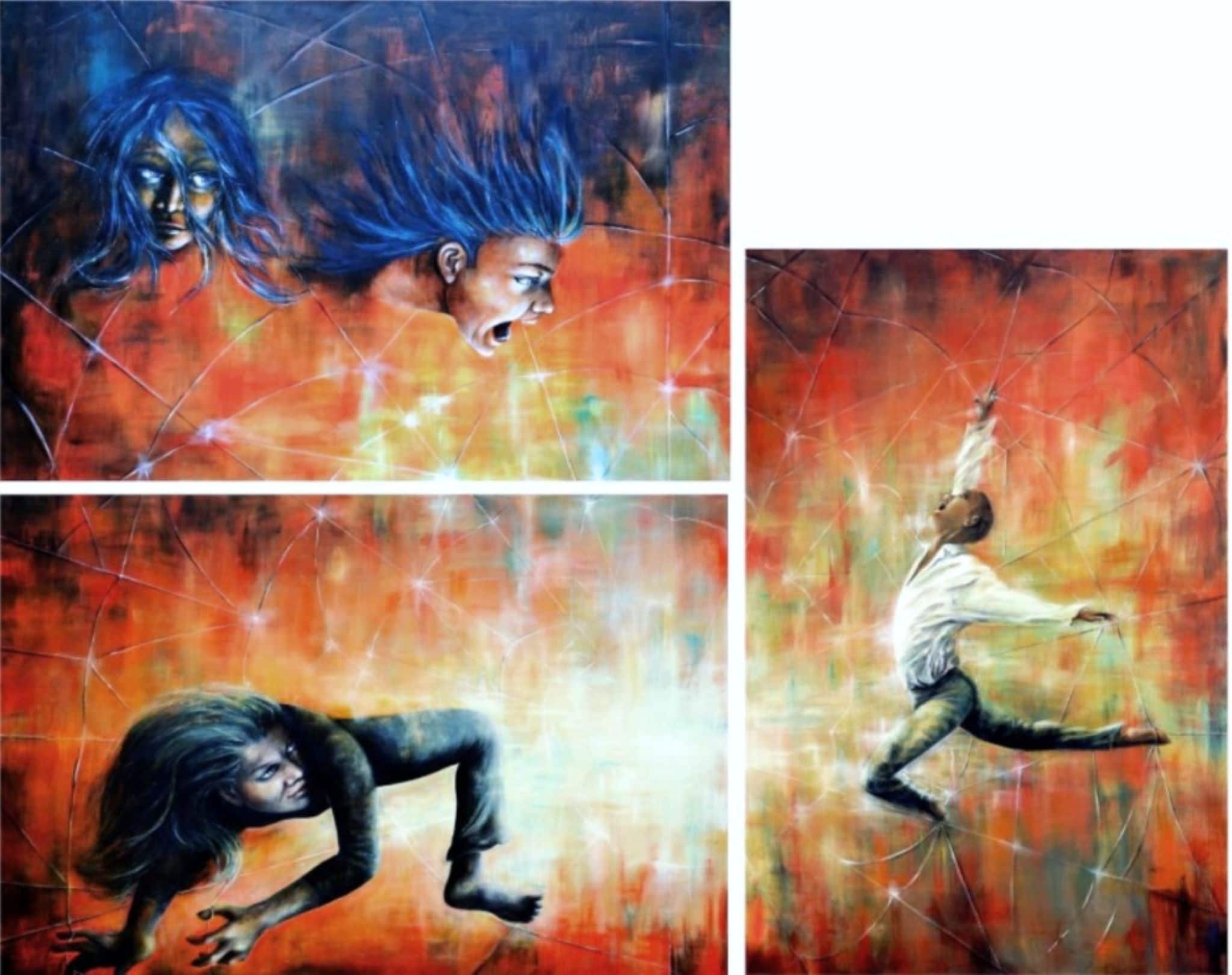
In this powerful triptych, the artist explores seduction as a trap through the metaphor of the spider’s web and the female-spider figure. The composition unfolds in three visual movements narrating the path of a man ensnared by his desires, risking the loss of self.
On the left, hypnotic, predatory faces emerge—hair like threads of an invisible net. Subtle, manipulative gestures lure the prey: attraction becomes peril.
At the center, the victim is entangled in the web: a distorted being, blinded by desire and unable to distinguish play from deception.
On the right, the final male figure attempts a gesture of liberation, leaping upwards in a movement that could be either desperation or the first spark of awareness.
The work is a striking visual metaphor of eros as ambivalent force: vital attraction on one hand, risk of manipulation and loss on the other. The web is spun in shadow, where its poison grows more concentrated.
All the artworks on this page can be viewed in high definition. Click on the image (or tap the screen if you are using a smartphone or tablet) to enlarge it. The viewer also allows horizontal scrolling between paintings.
This page is part of the thematic section Inner Explorations.
Explore the related collections: 🤝 Human Connections · 💠 Emotional Dynamics · 🌌 Soul Journeys