Rosario Pinto
Two critical readings across two volumes of the series “Between Tradition and Innovation” by Rosario Pinto situate Aurora Mazzoldi's work between an awareness of tradition and an innovative drive, with a figuration able to transfigure reality through psychological and symbolic lenses.
Between Tradition and Innovation
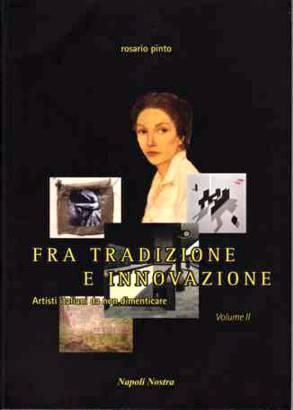
Vol. 2 — Italian Artists Not to Be Forgotten
Between debts to the past and new expressive goals: a figuration that brushes the hyper-figurative and transfigures the real into a poetic, eidetical key.
Critical insight by Rosario Pinto on the work of Aurora Mazzoldi, which unites Central-European roots, analytical attention to detail, and a chromatic intimacy capable of transfiguring reality in a poetic and psychological register.
“Aurora Mazzoldi's pictorial production takes us into the heart of a figurative climate seeking an original and fully formed impetus, conscious of its debts to the past yet at the same time proudly reaching toward new constructive goals.
Her output proves even more interesting if we consider that it gathers reasons stemming not only from the artistic tradition, but also from markedly Mitteleuropean dynamics. Within this context, the painter ultimately lived her human and formative experience — not only because she was born in the Trentino region, but also as a result of time spent in Austria, France, and England.
The painter observes the surrounding reality with loving care and investigates all its facets with precise and thorough analysis, turning to the representation of objects and figures with a figurative zeal that at times brushes the very realm of the “hyper-figurative.”
What distances our artist from that particular creative cadence are the accents of satisfied intimacy that characterize her work — revealed through a preference for compositional perspectives and palettes relying on sfumato solutions. These necessarily shift the logical order of image construction from the plane of objective rendering to that of eidetical transfiguration.
Mazzoldi's images cannot be defined specifically as “oneiric,” since they do not fall within a purely Surrealist production tout court; at the same time, they discourage an assessment in terms of punctual realism. Rather, they emerge as exemplary configurations of a psychological appeal and a need to externalize feelings that present themselves — beyond any more cursive symbolist concessions, aptly avoided — as intriguing products of ideas that gradually take shape and gain substance.”
Source: Rosario Pinto, Between Tradition and Innovation — Italian Artists Not to Be Forgotten, Vol. II, Napoli Nostra, 2011, pp. 185–188.
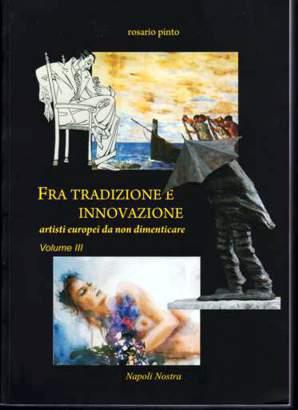
Vol. 3 — European Artists Not to Be Forgotten
Toward a figuration that investigates the psychological and moral themes of human experience, with a lucid, non-divisive feminine sensitivity.
Critical insight by Rosario Pinto into the inner and existential dynamics in Aurora Mazzoldi's painting, where figuration intertwines with psychological inquiry and the recognition of a distinctive feminine sensibility.
“A close analysis of the creative dynamics of Aurora Mazzoldi's painting places us before the activity of a painter who, with increasingly attentive and intense personal participation, sets out to make the artist's condition that of an interpreter of the existential and psychological reasons that characterize and distinguish the paths of human presence.
The artist — whose pictorial work we have already examined, emphasizing her disposition to investigate “with careful and precise analysis all the facets, turning to the representation of objects and figures with a figurative zeal that at times approaches the very realm of the ‘hyper-figurative’” — can and must now be further analyzed as a personality particularly inclined to comprehend and pictorially transcribe those psychological and moral themes that distinguish the most intimate and precious lived experience of every human consciousness.
It certainly benefits the artist, in approaching things and consciences, that her acute sensitivity and investigative capacity choose to observe the detail of things not in the particulate dimension of the fragment, but in the deeper consistency of concentrated specificity — that is, a place where the concentration of content-related significance reaches its fullest intensity.
A disposition toward a figurative representation in which the object's proposition is not a mere transcription of reproductive fidelity, but an attempt to penetrate the deeper regions of the phenomenological consistency of the real, accounts for that content-related intensity which distinguishes and privileges Mazzoldi's formal research. What also emerges is the vivid awareness of a distinctive feminine quality — never viewed through the discriminating and exclusive lens of a “gender” division, but with the mature awareness of highlighting a precious peculiarity that, far beyond any dialectic of opposing parts, is a determining factor in building the completeness of being.
Appropriately, dwelling on this specific aspect of Mazzoldi's painting, Gianluigi Guarnieri has noted that “the artist interprets the female figure in a dimension of rarefied solitude and severity, captured in the most troubled instant of existence,” adding that “dynamic lines brush the bodies, caress sweet and sad faces, render thoughts sinuous, moving toward a dreamlike dimension.” (29)
In essence, a path of inward reading constitutes the goal the artist sets for her research. And we should note that in this introspective path there is no personal solitude or despondent withdrawal of individual consciousness; rather, there is an awareness that within each of us lie not only the instances of our personal lived experience, but also those of humanity as a whole — of which every particular sensitivity of ours is both mirror and revealing occasion. To know oneself, we might say, is to move toward understanding the world — a world that the “introspective” disposition helps us to recognize more clearly in its historical and determinative properties.”
Source: Rosario Pinto, Between Tradition and Innovation — European Artists Not to Be Forgotten, Vol. III, Napoli Nostra, 2015, pp. 178–179.
Critic: Rosario Pinto — Napoli Nostra Review Title: “Between Tradition and Innovation” Volumes: Vol. II — Italian Artists Not to Be Forgotten (2011) · Vol. III — European Artists Not to Be Forgotten (2015) Years: 2011 · 2015 Origin: Books from the series Between Tradition and Innovation Publication: Napoli Nostra, Vol. II, 2011, pp. 185–188 · Napoli Nostra, Vol. III, 2015, pp. 178–179
References & sources
- eidetico / eidetical (Wiktionary)
- richiamo psicologico / psychological appeal (Osservatorio Interiore — arte introspettiva)
- simbolistici (IT internal link — quadri simbolici)
- symbolist (EN internal link — symbolic works)
- dinamiche interiori (IT internal link — quadri su dinamiche emotive)
- inner and existential dynamics (EN internal link)
- interprete delle ragioni esistenziali e psicologiche / interpreter of the existential and psychological reasons (Osservatorio Interiore — guardarsi dentro)
- percorso introspettivo / introspective path (Osservatorio Interiore)
- Conosci te stesso / To know oneself (Wikipedia)